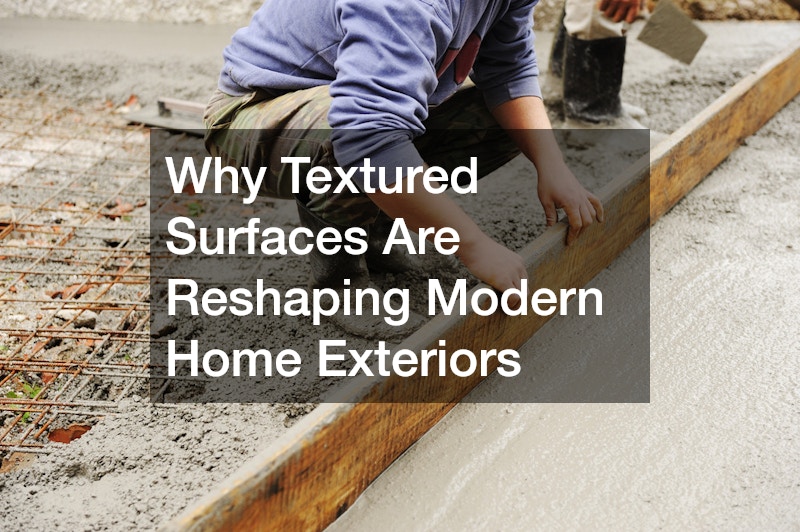
Curb appeal has quietly shifted from flat paint and smooth siding to surfaces you can actually feel, and homeowners across the country are noticing the difference in resale value and everyday enjoyment. Textured exteriors bring depth, shadow, and personality to a house in a way that flat finishes simply cannot match. If you are planning an upgrade, understanding where texture makes sense, and where it requires professional help, will save you time and money. This guide walks through the most popular textured exterior features and what to consider before committing to any of them.
Textured Concrete Walkways and Driveways
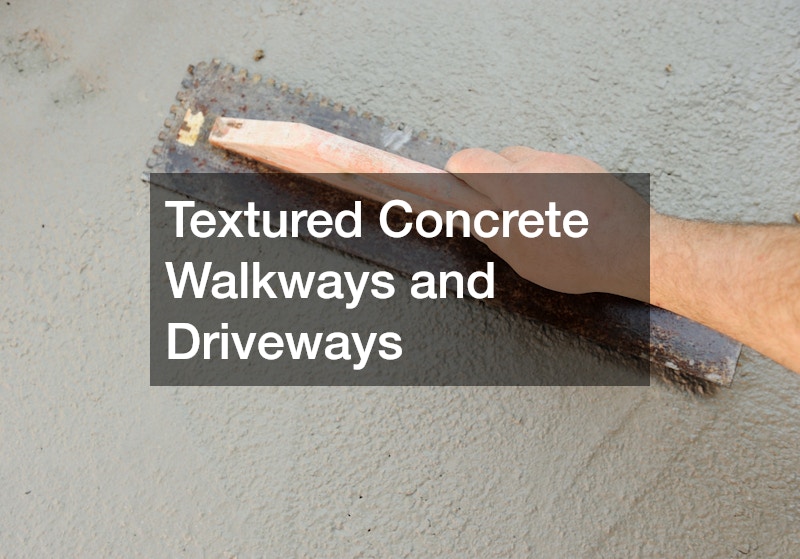
One of the fastest ways to add texture to a home exterior is through the concrete underfoot. Stamped patterns that mimic slate, cobblestone, or brick give driveways and patios a custom look without the cost of natural stone. Getting this right depends heavily on skill, since the pattern needs to be pressed evenly before the concrete cures.
This is why so many homeowners hire a stamped concrete contractor rather than attempting a DIY pour. A qualified stamped concrete contractor understands curing times, color hardeners, and sealants that keep the texture crisp for years instead of fading within a single season. They can also advise on slip resistance, which matters for pool decks and entryways exposed to rain or snow.
- Ask to see finished projects at least a year old to judge how well the texture holds up
- Request samples of color and pattern combinations before the pour begins
- Confirm the sealant schedule needed to maintain texture and color over time
- Discuss drainage slope so water does not pool in decorative grooves
Repairing Cracked or Uneven Concrete Paths
Before adding any new texture, it is worth addressing the concrete that already surrounds your home. Cracked, sunken, or uneven walkways are not just an eyesore, they are a tripping hazard that can affect insurance claims and resale inspections. Many homeowners are surprised to learn that sidewalk repairs can often be done in sections rather than requiring a full tear-out.
Timing matters too. Small cracks left unaddressed tend to widen after freeze-thaw cycles, turning a simple patch job into a costlier replacement. Scheduling sidewalk repairs before winter or immediately after a harsh season can prevent the damage from spreading into your foundation or driveway edges.
- Look for hairline cracks wider than a quarter inch, which signal deeper settling
- Check for lifted slabs near tree roots, a common cause of uneven paths
- Note any pooling water after rain, which suggests grading problems
Textured Siding and Exterior Wall Finishes
Siding manufacturers have leaned heavily into texture over the past decade, offering wood-grain vinyl, stucco-style panels, and board-and-batten profiles that add dimension to otherwise flat facades. These finishes catch light differently throughout the day, which gives a home more visual interest than a smooth painted surface ever could. Homeowners often pair textured siding with contrasting trim to highlight the depth even further.
A professional painting service plays a bigger role here than most people expect, since textured surfaces absorb and reflect paint differently than smooth ones. A skilled painting service will adjust technique, using thicker nap rollers or sprayers, to ensure the texture is not lost under a heavy coat. Getting this wrong can flatten the very detail you paid extra to install.
- Choose exterior paint formulated for textured surfaces to avoid cracking
- Ask about breathable coatings if your siding is stucco or fiber cement
- Request a test patch before committing to a full-house repaint
Textured Roofing Materials That Add Dimension
Roofs are one of the largest visible surfaces on any home, and textured roofing materials like dimensional shingles, slate-look composites, and wood-shake alternatives have become popular for the shadow lines they create. These products are designed to look less uniform than traditional three-tab shingles, giving the roofline a richer, more layered appearance from the street. The added texture can also help disguise minor imperfections in the roof deck below.
Because these materials vary in weight, installation method, and ventilation needs, it is worth consulting experienced roofing contractors before choosing a style. Reputable roofing contractors can explain how textured shingles perform in high wind or heavy snow regions, since some profiles are rated differently than standard flat shingles. They can also match the new roofing to your home’s existing color palette so the transition looks intentional rather than patched together.
- Compare wind and impact ratings between textured and standard shingle lines
- Ask how the added texture affects long-term maintenance and moss growth
- Confirm warranty terms specific to dimensional or textured products
Foundation and Structural Considerations Before Adding Exterior Texture
It is tempting to focus purely on aesthetics, but any major exterior renovation should start with a check on the structure beneath it. Textured stucco, stone veneer, and heavy siding materials add weight and moisture exposure that an aging foundation may not be prepared to handle. If you notice cracks in the foundation wall or doors that stick seasonally, it is worth investigating before layering on new finishes.
Reputable foundation repair services can assess whether your home’s base is stable enough to support heavier textured materials like manufactured stone or thick stucco coats. Foundation repair services typically use techniques such as underpinning or piering to correct settling issues, which should always happen before cosmetic work begins. Skipping this step can mean redoing expensive exterior work within just a few years.
- Watch for stair-step cracks in brick or block foundations
- Check window and door frames for new gaps or misalignment
- Have a professional inspect crawl spaces for moisture intrusion
Site Grading and Drainage Around Textured Hardscapes

Textured patios, retaining walls, and stamped walkways all depend on proper grading to perform well over time. A standard rule of thumb is a slope of at least 2% (roughly a quarter-inch drop per foot) directing water away from the house and toward an approved drainage path. Without this, water that pools against a foundation or beneath a hardscape can undermine even the most beautifully finished surface within a few seasons, leading to cracking, heaving, or efflorescence on textured concrete and pavers.
Soil type plays a major role in how much grading and drainage work a project needs. Clay-heavy soil drains poorly and expands when saturated, which can push against retaining walls or lift sections of a walkway unevenly. Sandy or loose soils, on the other hand, may require additional compaction or a deeper gravel base to keep textured surfaces from settling.
This is where a local excavation contractor becomes essential, especially for properties with sloped yards or drainage challenges specific to the region’s soil and rainfall patterns. An experienced contractor can install French drains, dry wells, or channel drains beneath or alongside hardscapes to redirect water before it reaches vulnerable areas. They can also assess whether a retaining wall needs weep holes or a perforated drain pipe behind it to relieve hydrostatic pressure, a detail that’s easy to overlook but critical for long-term stability.
A local excavation contractor can regrade the land around your home so runoff moves away from the foundation and new textured surfaces instead of collecting near them. A general rule of thumb is a slope of about 2% grade, or roughly a quarter-inch drop per foot, extending at least six to ten feet from the house. Without this pitch, water tends to pool in low spots, seeping into joints and accelerating wear on stamped concrete, textured pavers, or aggregate finishes.
This work often happens before any decorative concrete or fencing goes in, since disturbing the soil later can crack finished surfaces or undermine fence posts that were set into unsettled ground. Excavators also account for existing utility lines, downspout placement, and soil composition, since clay-heavy soil drains far slower than sandy or loamy mixes and may need additional gravel base or French drains. Skipping this step can mean costly repairs down the road, including releveling settled pavers or patching hairline cracks caused by frost heave.
Planning excavation and texture installation together tends to save both time and money, since contractors can coordinate base compaction, drainage channels, and finish grading in a single sequence rather than reworking a finished surface. It also gives homeowners a chance to discuss where catch basins, dry wells, or permeable jointing sand might reduce runoff before decorative work locks the layout in place.
- Ask for a grading plan that shows water flow direction before construction starts, with a minimum slope of 2% (about 1/4 inch per foot) away from the house
- Request drainage solutions like French drains or channel drains for particularly wet yards or low spots where water tends to pool
- Confirm soil compaction testing if you are adding heavy stone or paver features, since loose soil can settle unevenly and crack textured surfaces later
- Check that textured pavers or stamped concrete include proper joint spacing or permeable base material so water can drain through rather than sheet across the surface
- Verify downspouts and gutters redirect runoff at least 5-10 feet from the hardscape edge to prevent erosion and staining on textured finishes
Textured Fencing Materials for Privacy and Style

Fencing has followed the same trend as siding and roofing, with homeowners choosing rough-sawn wood, textured composite panels, and stacked stone accents over plain flat boards. These materials add privacy while giving the yard a more finished, intentional look from both the street and the backyard. Textured fencing also tends to hide minor warping or weathering better than smooth painted panels.
Working with experienced local fence contractors ensures the texture is applied evenly across posts, panels, and gates so the finished look is consistent. Local fence contractors can also recommend materials suited to your climate, since some textured composites hold up better in humid or coastal environments than others. Getting a professional installation also helps avoid the sagging or gapping that often happens with DIY fence projects.
- Compare cedar, composite, and vinyl textures for durability in your climate
- Ask about staining options that enhance rather than flatten wood grain
- Request post spacing recommendations based on your fence height and material
Exterior Lighting and Systems That Complement Textured Surfaces
Texture is most striking when light hits it at the right angle, which is why many homeowners upgrade exterior lighting alongside their siding, roofing, or hardscape projects. Uplighting along a stone veneer wall or a stamped concrete path can dramatically enhance the shadows and depth that daytime light alone does not reveal. This step is often overlooked but makes a noticeable difference at night.
Any new exterior lighting or outdoor outlet work should be handled by licensed electricians rather than attempted as a weekend project. Electricians can run properly grounded, weatherproof wiring to outdoor fixtures and ensure everything meets local code, which matters both for safety and for future home inspections. This is also a good time to evaluate whether your electrical panel can support additional exterior circuits.
- Choose LED fixtures rated for outdoor and wet locations
- Ask about smart lighting controls that adjust brightness by time of day
- Confirm GFCI protection on all new outdoor outlets
Home Systems That Keep Pace With Exterior Renovations
A textured exterior overhaul is a good moment to think about the systems that keep the rest of your home comfortable, since major projects often expose or disturb existing utility lines. If your renovation involves excavation near gas or water lines, it is worth confirming that your water heater installation is up to code and not at risk during construction. Scheduling water heater installation around a larger renovation timeline can also help you avoid disruptions to hot water access mid-project.
Similarly, residential HVAC services are worth consulting if new siding, insulation, or window trims are part of your exterior plan, since these changes can affect airflow and energy efficiency. A technician offering residential HVAC services can check that vents and exterior units are not blocked by new fencing, landscaping, or hardscape features. Coordinating these systems early prevents costly rework once the visible, textured finishes are complete.
- Confirm exterior HVAC units have adequate clearance from new fencing or landscaping
- Ask about combined scheduling if plumbing and electrical work overlap with construction
- Check that any new water heater venting complies with updated exterior wall materials
Textured exteriors offer a genuine upgrade in curb appeal, but the best results come from treating the project as a whole system rather than a single cosmetic choice. Start with the structural and drainage basics, then move outward to siding, roofing, and hardscape finishes that will actually last. Bringing in the right specialists at each stage protects your investment and ensures the final look holds up for years to come. With a clear plan, your home can gain the depth and character that textured surfaces are known for without unexpected setbacks along the way.